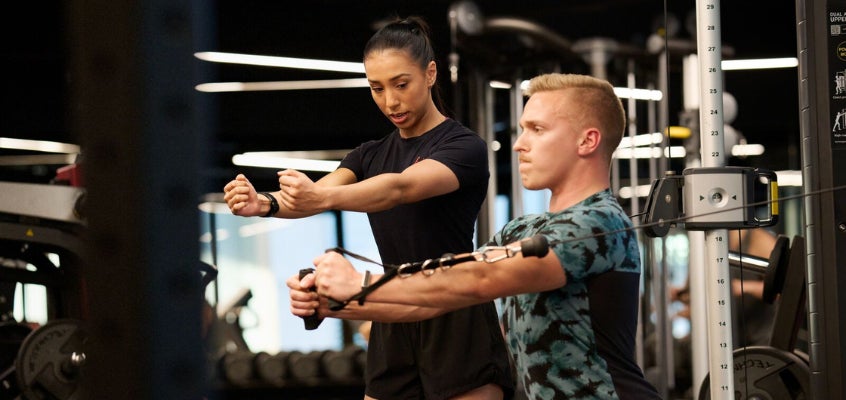
How to master the cable machine
by Patrick Ibsen on Wednesday 19 August 2026
3 min read
Cable machine workout guide
Cable machines are some of the most underrated pieces of fitness equipment in the gym. But they can look quite intimidating – like some sort of medieval torture device. Thing is, once you understand how they work, they're surprisingly easy to love.
What are cable machines, anyway?
A cable machine uses a weighted stack connected to a cable and pulley system, rather than a fixed bar or dumbbell.
Unlike free weights, which rely on gravity pulling straight down, cables let you move in almost any direction, forwards, sideways, diagonally or overhead. And unlike fixed-resistance machines that lock your body into one position, cables let your joints move naturally through space.
That's a big deal if you're chasing functional fitness or strength that actually translates to real life.
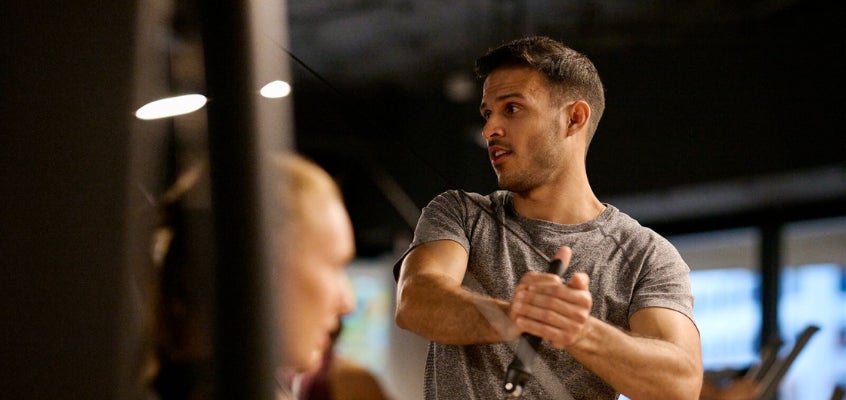
Why cable training earns its place in your routine
Constant tension, constant benefit
Because the cable stays taut throughout the movement, your muscles rarely get a break. That constant tension builds strength more evenly across a full range of motion, rather than just at the targeted part of a lift.
Stability without the guesswork
Cables challenge your core and stabiliser muscles to keep you upright and controlled, similar to free weights. But the fitness equipment provides a little more support than working entirely unassisted. It's a smart middle ground for building confidence and functional fitness.
Versatility for every body
From standing chest presses to woodchoppers, a single cable station can deliver a genuine full-body workout. Adjustable pulleys and handles mean the same machine can suit a first-timer and a seasoned lifter.
Cable machine exercises worth trying
Beginner-friendly
If you're new to cable machines, start with a standing cable row.
- Set the pulley to chest height.
- Grab the handle with both hands.
- Pull towards your torso while keeping your back straight.
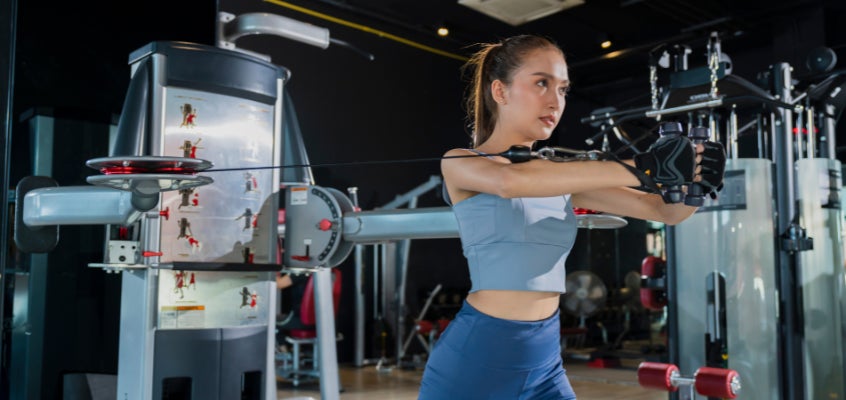
The standing cable chest press is another great starting point.
- Set the pulley to shoulder height.
- Step forward and press the handle out in front of you.
Both moves teach your body to control the cable rather than let it control you, which is the real skill behind good cable machine workout technique.
Upper body
Lat pulldowns target the back and shoulders and are a smart alternative if pull-ups still feel out of reach.
- Sit under the bar.
- Grip it slightly wider than shoulder-width.
- Pull down towards your chest without leaning back too far.
Cable flys isolate the chest in a way that dumbbells often can't, thanks to that steady tension through the entire movement.
- Set pulleys to chest height.
- Pull handles together in front.
- Squeeze chest, return with control.
Tricep pushdowns are an easy way to finish off an arm session, using a rope or bar attachment to build definition through the back of the arms.
- Attach rope, set shoulder height.
- Push down, elbows tucked in.
- Squeeze triceps, release with control.
Together, these three moves cover most of what your upper body needs.
Lower body
Standing hip abductions can really get the legs burning.
- Attach the cable to your ankle
- Lift your leg out to the side
- Target the outer glutes and hips.
Core
The woodchopper mimics a real-life twisting motion, like swinging a golf club or turning to grab something behind you.
- Set the pulley high
- Pull the handle diagonally down across your body.
- Control the movement back up.
The Pallof press works differently.
- Hold the cable at chest height.
- Press it straight out in front of you, resisting the urge to let your torso twist.
That resistance is the whole point. It's called anti-rotation training, and it builds a strong, stable midsection. This standard cable machine core exercise targets your core in a way that a plank or sit-up cannot.
Common mistakes to avoid
Rushing the movement is the biggest one. Slow it down, and you'll feel the difference. Also, watch your posture. Leaning too far back or letting your shoulders roll forward reduces the benefit and increases injury risk. Finally, don't skip the adjustment step. Setting the pulley height to suit the exercise makes a genuine difference to results.
Cable machines fit almost any goals
Whether you're building raw strength, working on rehab, or just want variety, a cable machine workout complements nearly every training style. Mix it into a hybrid training approach for a full-body workout, or pair it with grid training sessions for an extra HIIT hit.
Still not sure where to start? Virgin Active's Personal Trainers can help you build a cable routine personalised to your goals, body and confidence level, so every session counts.

Enjoying our blog?
Sign up to our newsletter to get updates on training, healthy living, news and events.