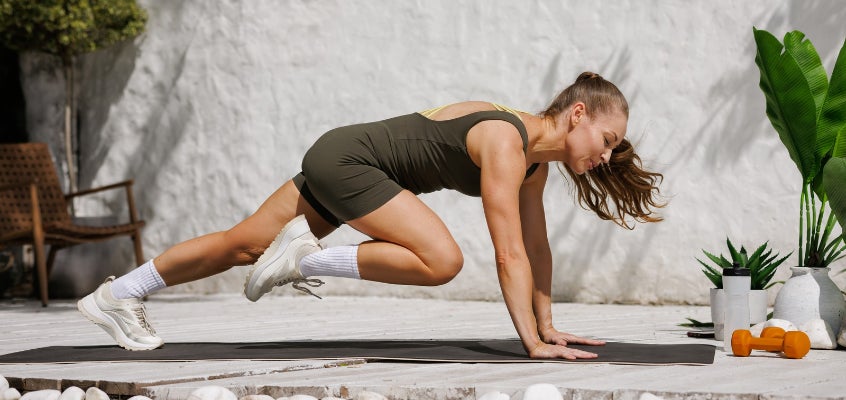
A guide to bodyweight training
by Carol Saldanha on Thursday 12 November 2026
3 min read
A guide to bodyweight training
Who said you need a rack full of dumbbells to get stronger? Sometimes, all you need is your own body.
Whether you're at the gym, home, or squeezing in a workout between meetings, bodyweight training requires no complicated equipment or elaborate setup. Just you, a little floor space and a willingness to break a sweat.
Here's how to make your own weight work for you.
What is bodyweight training?
Bodyweight training is a form of resistance exercise that uses your body weight to challenge your muscles. Think squats, lunges, push-ups and planks – all without weights.
Instead of lifting dumbbells or using machines, you're working against gravity. And the best part? You can adapt most exercises to suit your fitness level.
Whether you're taking your first steps into strength training or looking to mix up your usual gym routine, bodyweight exercises are a great place to start.
What are the benefits of bodyweight training?
Bodyweight training can deliver more benefits than making your body feel the burn.
No equipment needed
Forget the dumbbells and machines. Many bodyweight exercises can be done anywhere. This makes it easier to fit a workout into your day. So, no matter where you go or don’t go, you take your gym with you.
Adaptable to your fitness level
Is a push-up on your toes too much for you? Start with wall push-ups and build from there.
The beauty of bodyweight exercises is that you can modify them to make them easier or more challenging as your fitness improves.
Helps muscle building
One important part of growing your muscles is to keep them under tension. And bodyweight exercises put your muscles under enough tension to cause muscle damage, which triggers muscle growth.
A study found that push-ups and low-load bench presses produced similar improvements in chest and triceps muscle thickness over eight weeks in a small group of young men.
Plus, when you do bodyweight exercises, you benefit from the bonus effect of working several muscle groups at once.
Squats, lunges and push-ups engage several muscles and joints at once, helping develop strength and coordination through functional movements.
Improves your cardiorespiratory fitness
Research done in 2021 found that just 11 minutes of bodyweight interval training, three times a week for six weeks, improved cardiorespiratory fitness in previously inactive young adults.
So, get your heart pumping with bodyweight exercises like burpees, high knees and jump squats – your heart, along with your muscles, will thank you for it.
Bodyweight exercises for beginners
Ready to give it a go? Start with these five exercises to work different muscle groups.
Squats
Stand with your feet shoulder-width apart. Bend your knees and lower your hips as if you were sitting on a chair. You can even use a chair for feedback.
Wall push-ups
Place your hands around shoulder-width apart against a wall and bend your elbows to bring your chest towards it. Then, push away.
Reverse lunges
Step one foot backwards, bend both knees and return to standing. Alternate legs. As you progress, aim for your back knee to touch the floor.
Glute bridges
Lie on your back with your knees bent and your hands by your sides. Lift your hips while squeezing your glutes.
To progress, lift your hands to the ceiling as you move your hips up and down. To go further, keep one foot on the floor and bring the other leg to tabletop. But take your time.
Planks
Place your hands and toes on the ground and let them support the weight of your body while you stand still. But you can start planking on its simplest form: on your knees and forearms.
As planking gets easier (does it ever?), try to stand on your toes and forearms. The ultimate goal is to progress to hands and toes.
How to progress your bodyweight training
Start with what feels manageable. You don't need to conquer everything on day one.
Try 8–12 repetitions of each exercise or hold your plank for 15–30 seconds. Rest between movements and repeat the circuit if you feel comfortable.
According to the Australian Government's physical activity guidelines, adults should aim for muscle-strengthening activities at least twice a week.
Once those exercises start feeling like a walk in the park, it's time to turn up the challenge.
You could:
- Add repetitions: Gradually increase how many sets you complete.
- Slow things down: Lower yourself more slowly during a squat or push-up to increase your time under tension.
- Try harder variations: Progress from wall push-ups to floor push-ups, or from regular squats to split squats.
- Reduce rest periods: Shorten your breaks to challenge your muscular endurance.
The trick is gradual progression, not going from zero to superhero overnight. Remember:
- build strength slowly
- set achievable goals, and
- focus on correct techniques.
And if you're feeling unusually fatigued, it might be worth checking whether you need more recovery time. Our guide to recognising burnout is a good place to start.
Your body is your gym
Effective strength training doesn't always require equipment. With consistent practice, good technique and a little patience, bodyweight exercises can help you build strength and confidence in how you move.
Want some guidance getting started? Virgin Active's Personal Trainers can help you nail your technique, build a routine and keep challenging yourself as you progress.


Enjoying our blog?
Sign up to our newsletter to get updates on training, healthy living, news and events.